8 min read
The Best Time to Visit Namibia
Contents
- A word from one of our experts
- Namibia Month-by-Month Weather Guide
- Namibia in January
- Namibia in February
- Namibia in March
- Namibia in April
- Namibia in May
- Namibia in June
- Namibia in July and August
- Namibia in September
- Namibia in October
- Namibia in November
- Namibia in December
- Namibia inspiration
- Ready to start planning?
Our month-by-month guide explores Namibia’s changing seasons, highlighting wildlife, desert transformations and cultural festivals. With expert insight, we share the best times for the experiences you can enjoy throughout the year.

The best time to visit Namibia is during winter, between July and November. Days are warm, with temperatures of 21–29°C (70–84°F). There’s very little rain and the nights are cool. The land becomes dry and, with less vegetation, wildlife viewing conditions are excellent. Animals gather around the scarce water sources, forming impressive densities.
The summer months of October to April are much hotter with some heavy rainfall. Vegetation flourishes and desert flowers make an appearance. Smaller game can move away from predators as water sources increase. With sightings of newborn animals, migratory birds and less dust in the air, this is the best time to travel to Namibia for photographers.
To help you decide on the best time to travel to Namibia, we’ve put together a curated climate guide. We’ll help you navigate the climate, seasons and activities with the knowledge and experience of our Jacada experts.
A word from one of our experts
Emily describes why she believes the best time to visit Namibia is during the winter time, between June and October.
 Emily Wallington
Namibia Month-by-Month Weather Guide
Although Namibia is a dry, desert country, each month brings shifts in the climate. Changes in rainfall and temperature alter the landscapes and wildlife. Some months become great for safari and hot air ballooning, others best for dramatic landscapes and photography.
Namibia in January
Best for birdwatching
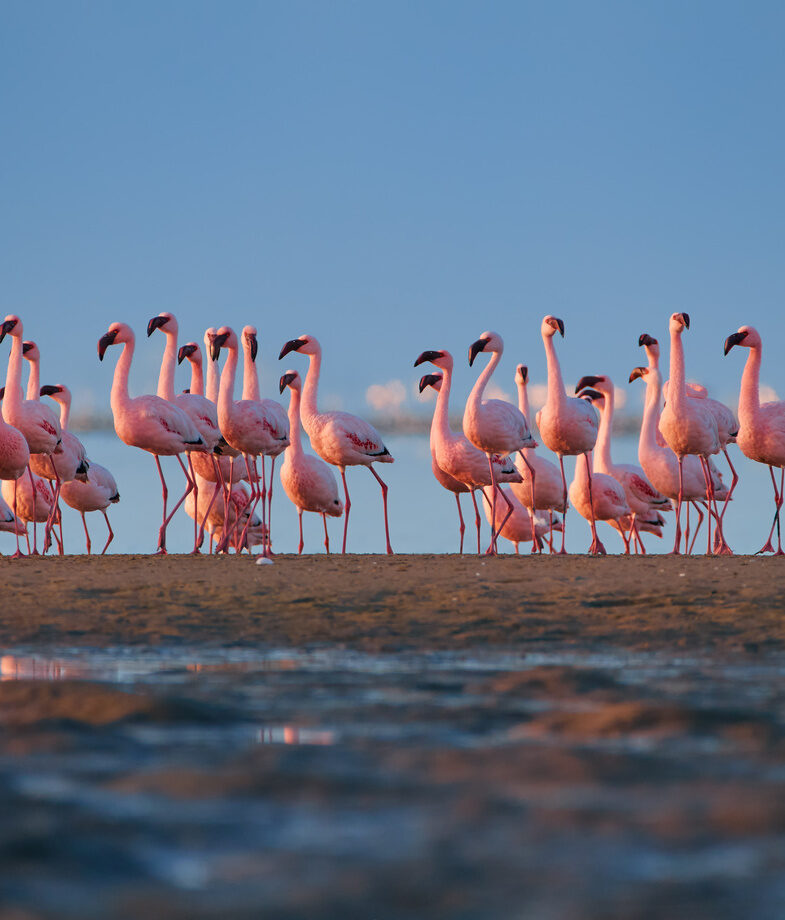
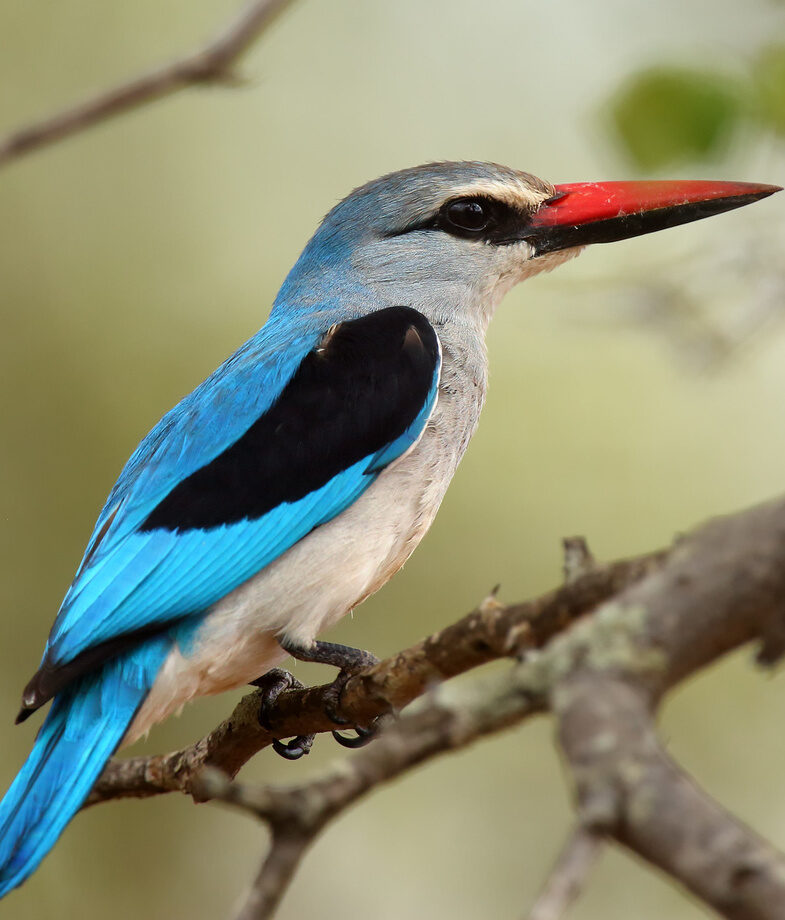
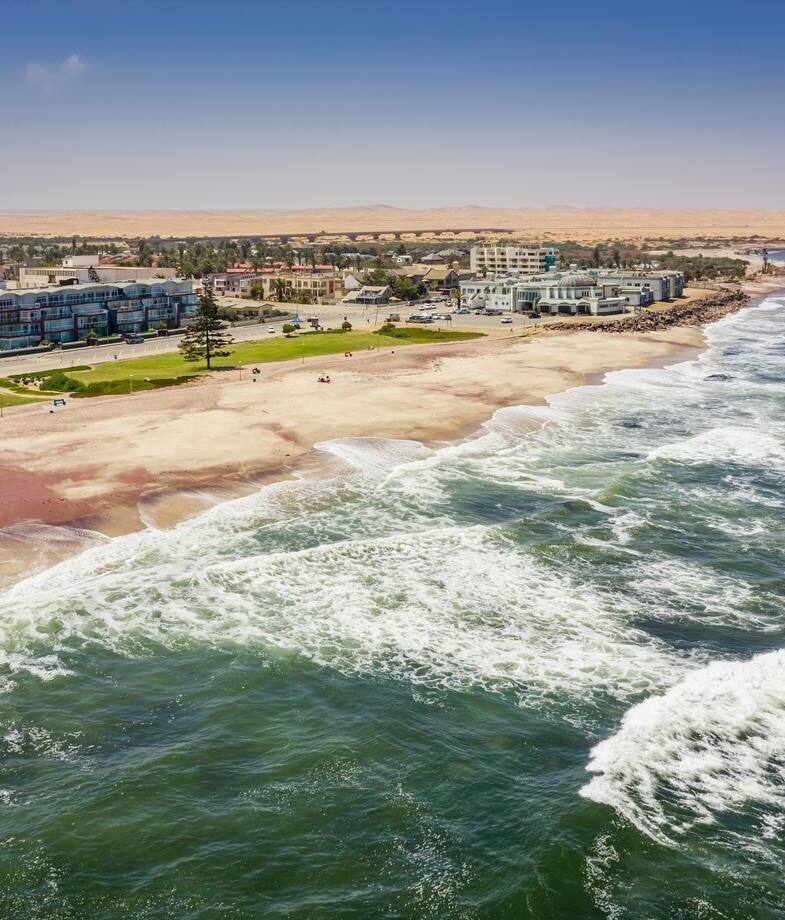
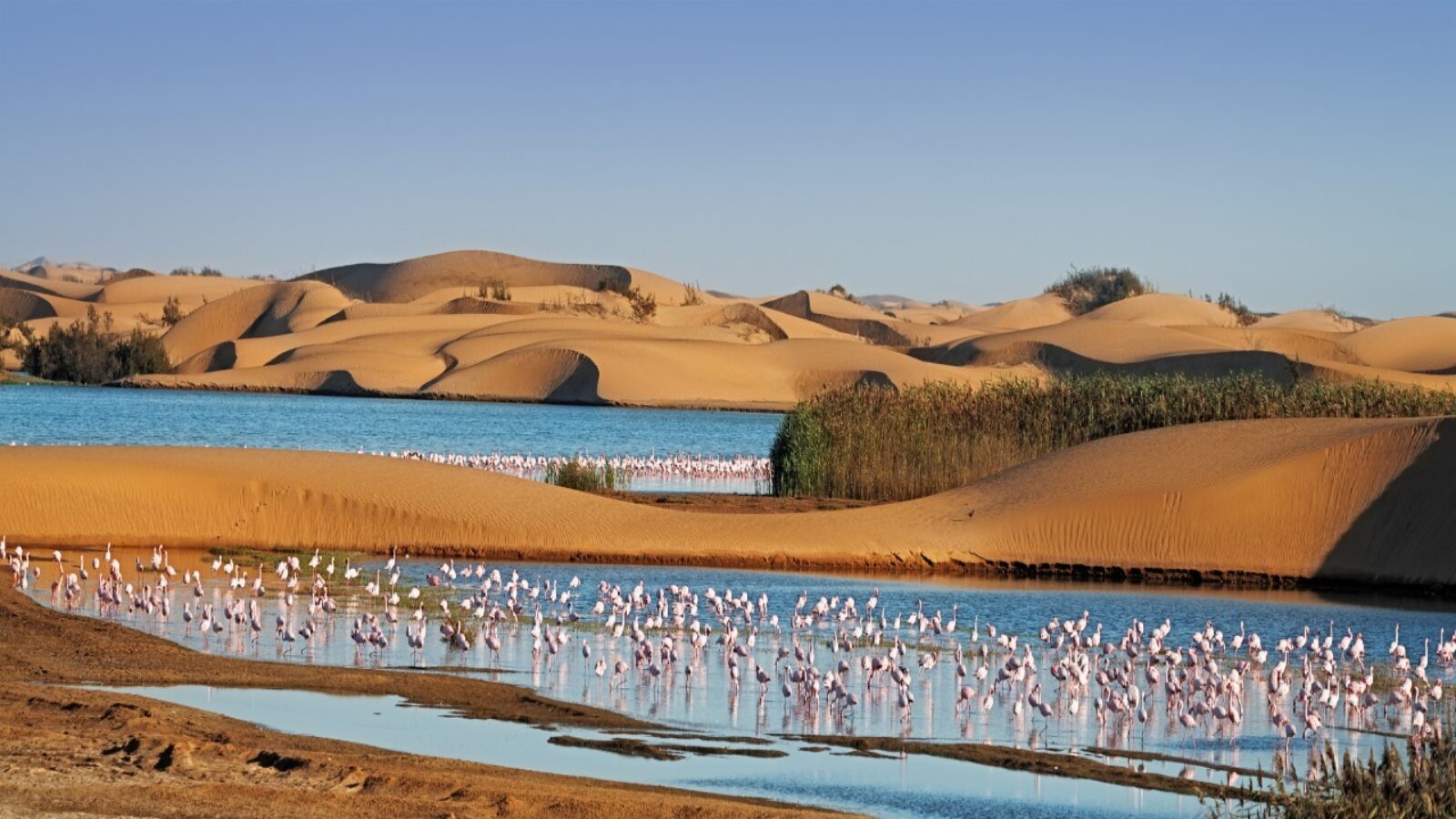
January is the height of summer in Namibia and part of the wet season, which runs from November to April. Heavy rains often fall with thunderstorms that create dramatic skies, with daytime temperatures reaching 40°C (104°F) and nights still warm. The Caprivi Strip becomes a paradise for birdwatchers, while on the coast Swakopmund and Walvis Bay stay cooler and quieter, and you can watch large flocks of flamingoes gathering on the lagoons.
Namibia in February
Our favourite for relaxing by the coast
February is another wet month in Namibia, with afternoon rain showers and humidity building as temperatures climb to 40°C (104°F). The rains scatter wildlife, making game viewing less predictable, but this is also the calving season for zebra and springbok, with young animals visible across the landscape. On the coast, conditions are warm with highs of around 28°C (82°F) with refreshing sea breezes from the Benguela Current.
Namibia in March
A time for newborn wildlife
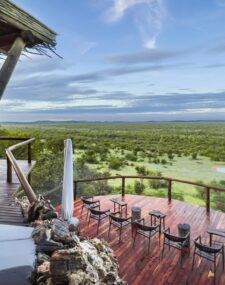
In March the rains ease and temperatures cool a little. You can experience morning temperatures of around 15°C (59°F) and midday highs often reaching 30°C (86°F) or higher in the desert. The landscape remains lush and it’s one of the best months to see newborn wildlife such as springbok, impala and wildebeest. We often recommend Ongava Main Lodge, as mothers and calves can be seen at waterholes or on game drives in Etosha National Park and Ongava Reserve.
Namibia in April
Best for cultural festivals
Rainfall decreases in April, marking the start of the shoulder season. Expect only a few lingering showers and daytime temperatures in the mid-20s°C (70°Fs). In Windhoek, the annual WIKA carnival is typically in April filling the capital with parades and music, while the Oshituthi Shomagongo festival celebrates the marula (a seasonal fruit) harvest, bringing communities together to share food, drink and storytelling.
Namibia in May
The start of rhino tracking season
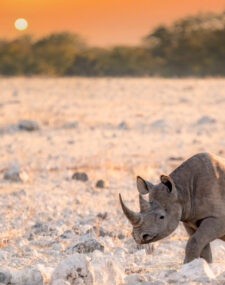
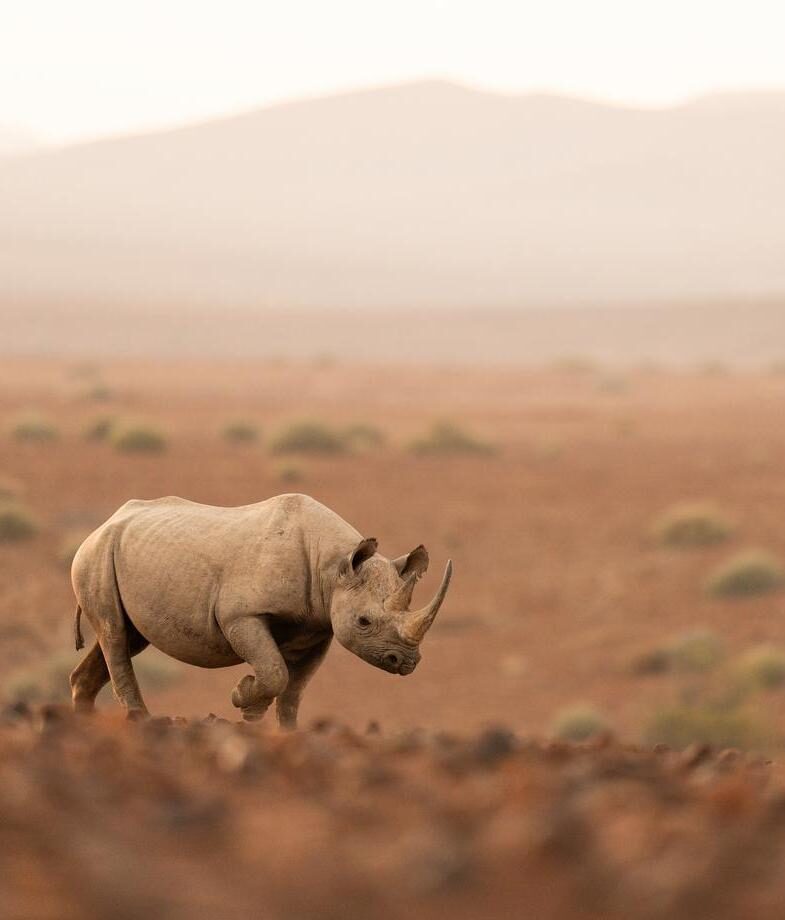
May is the official start of winter but still part of the shoulder season. Days are mild, averaging 13–22°C (55–72°F), making it a comfortable month to travel avoiding the high season. This is when black rhino tracking experiences begin in Damaraland. Although animals are still spread out in search of water, the vegetation supports wildlife year-round and dedicated trackers help to locate these epic creatures. Opportunities increase as the dry season continues until October.
Namibia in June
Best for safaris and hiking
In June, early morning game drives can feel chilly as winter sets in, with temperatures ranging from 10–25°C (50–77°F). Water sources begin to dry up, and by the end of the month conditions are ideal for safaris. In Etosha National Park, wildlife starts to gather at the waterholes, making sightings more frequent. The cooler climate is excellent for hiking the Fish River Canyon, when the trails are easier to tackle without the intense heat.
Namibia in July and August
Best for safaris and stargazing
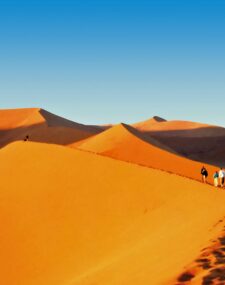
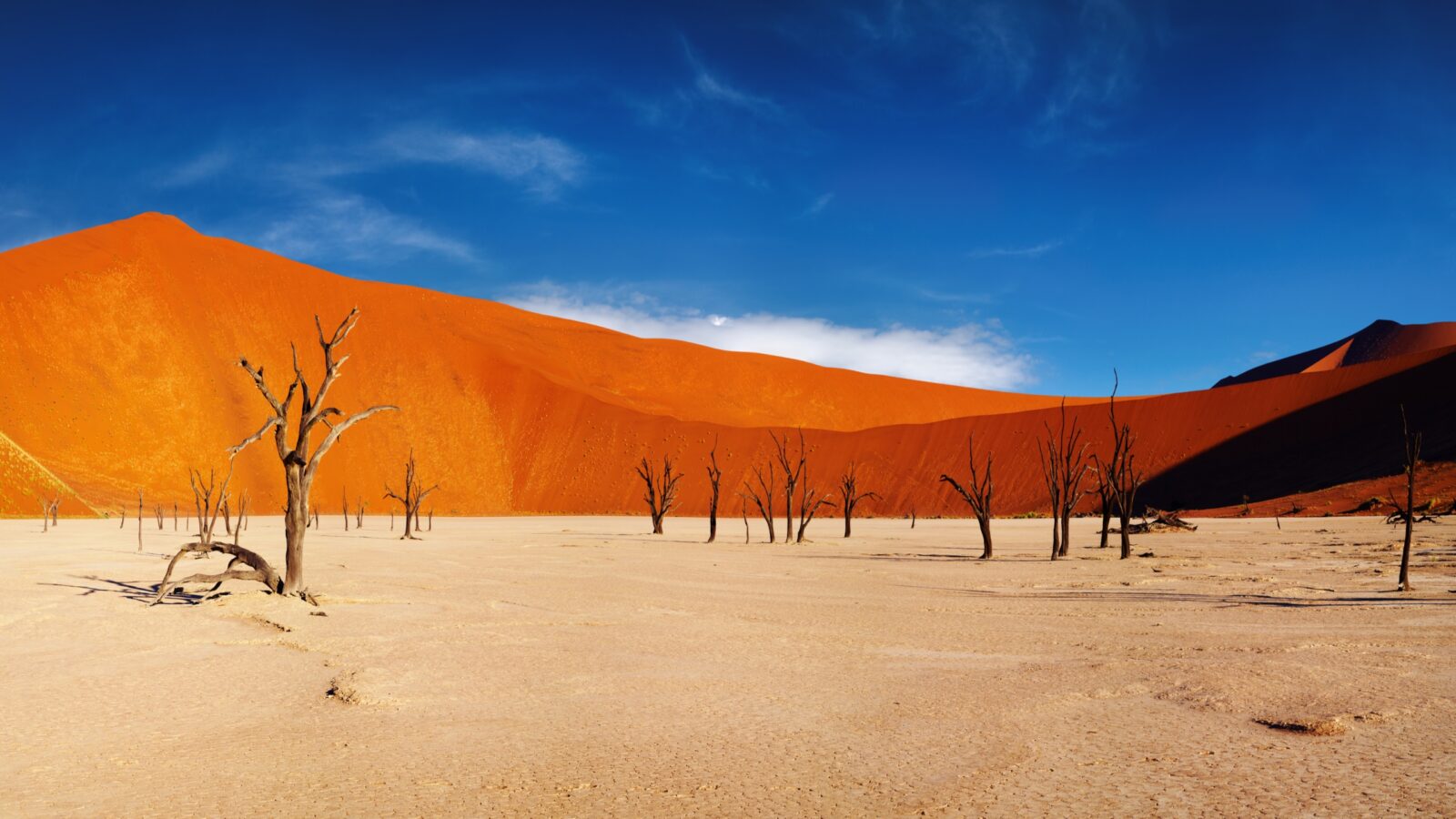
July and August are among the best times to visit Namibia. Days are warm but not too hot, averaging 21–25°C (70–77°F), while nights can be cold, sometimes dropping to freezing in the desert. With no rainfall, wildlife gathers at the remaining waterholes, making game viewing highly rewarding as visibility improves with sparse vegetation. These dry winter months also bring blue skies over the burnt-orange dunes of Sossusvlei, one of Africa’s best stargazing locations. As this is peak season, we recommend booking well in advance.
Namibia in September
Best for hot-air balloon experiences
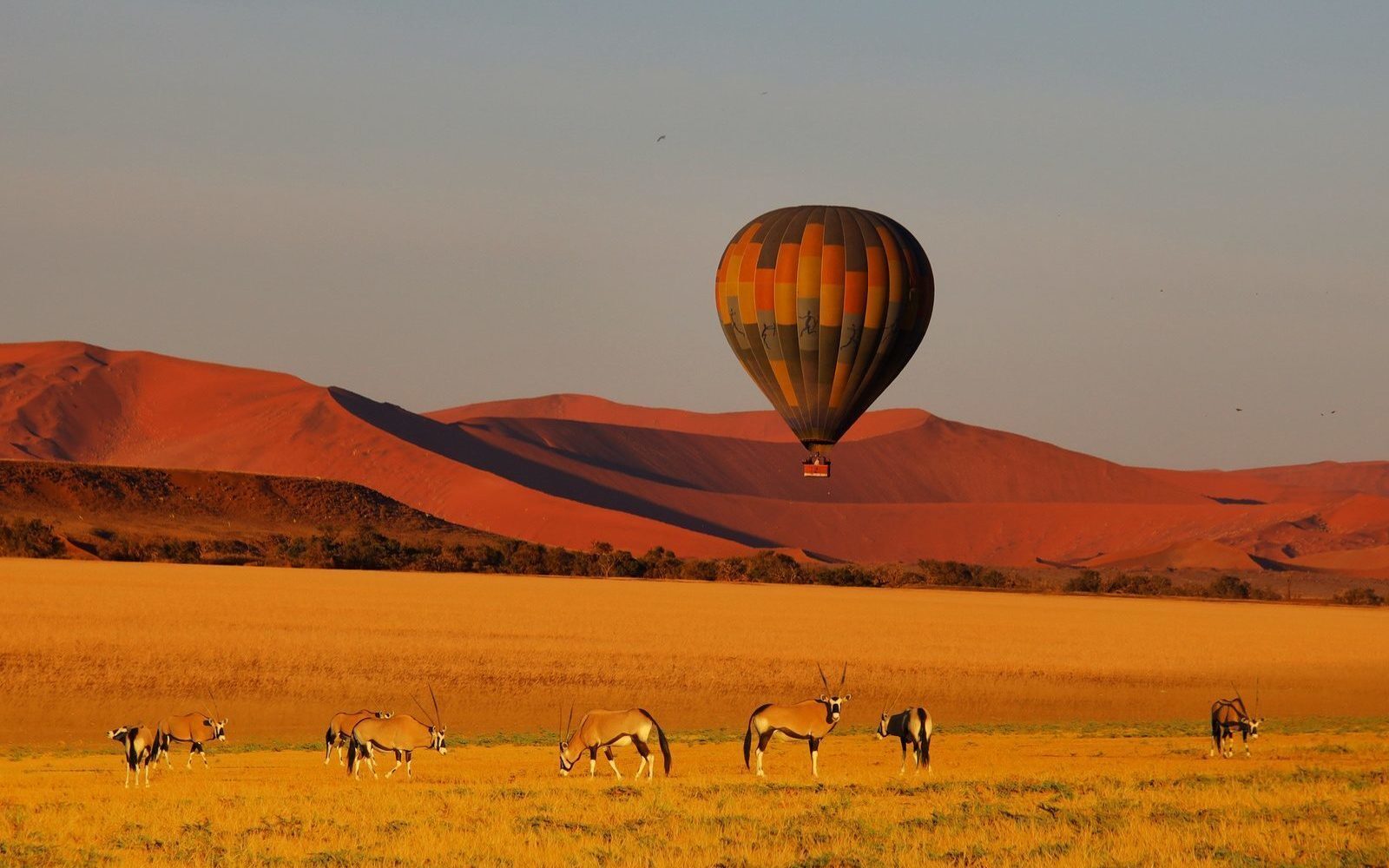
Namibia in September experiences warm days averaging 19–28°C (66–82°F). The landscapes are dusty and arid, but with fewer visitors than in July and August the experience feels calmer. It is also the prime month for hot air balloon safaris over Sossusvlei, where clear skies reveal the desert’s dawn colours in all their intensity – one of the most memorable to appreciate the sheer scale of Namibia’s landscapes.
Namibia in October
Best for whale watching
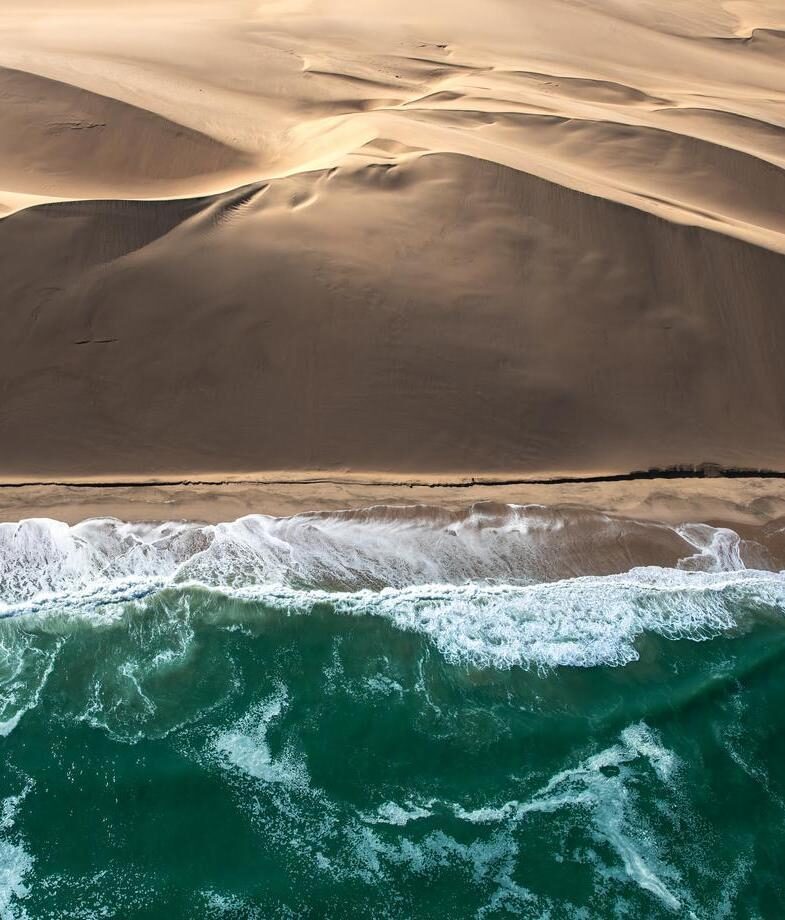
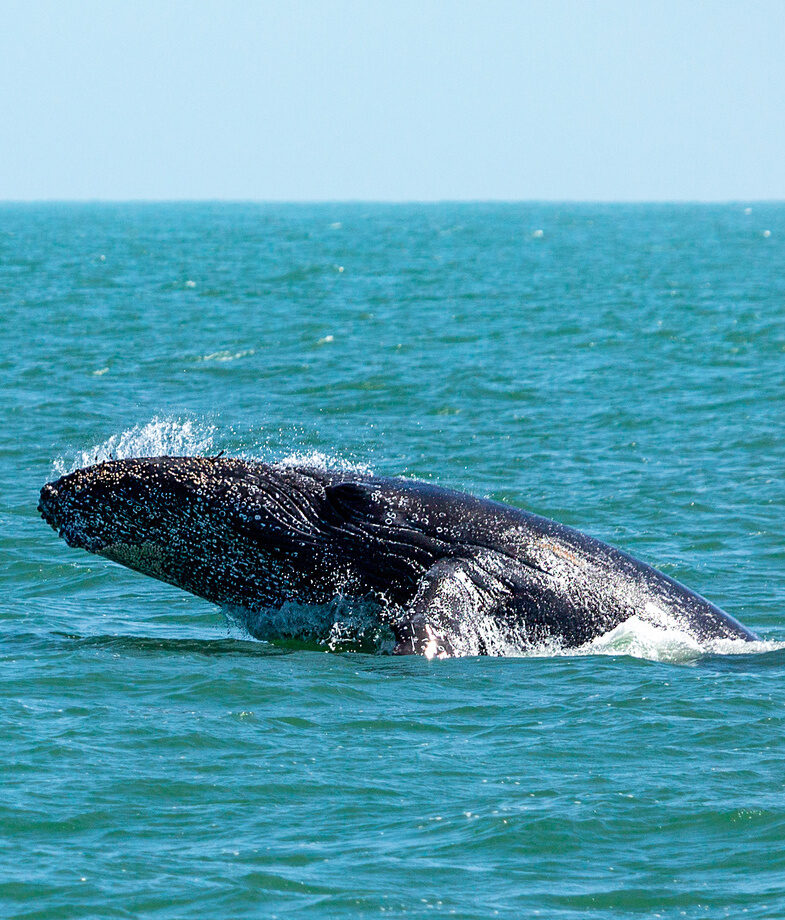
October is one of Namibia’s hottest and driest months, when daytime temperatures can reach 35°C (95°F). Scarce water sources draws wildlife to the last waterholes, creating some of the most dramatic game viewing of the year. Walvis Bay is prime for whale watching as southern right, humpback and minke whales migrate through the Atlantic, and the stable conditions on the Skeleton Coast let you appreciate the striking contrast of cobalt skies and desert dunes.
Namibia in November
Best for low-season travel
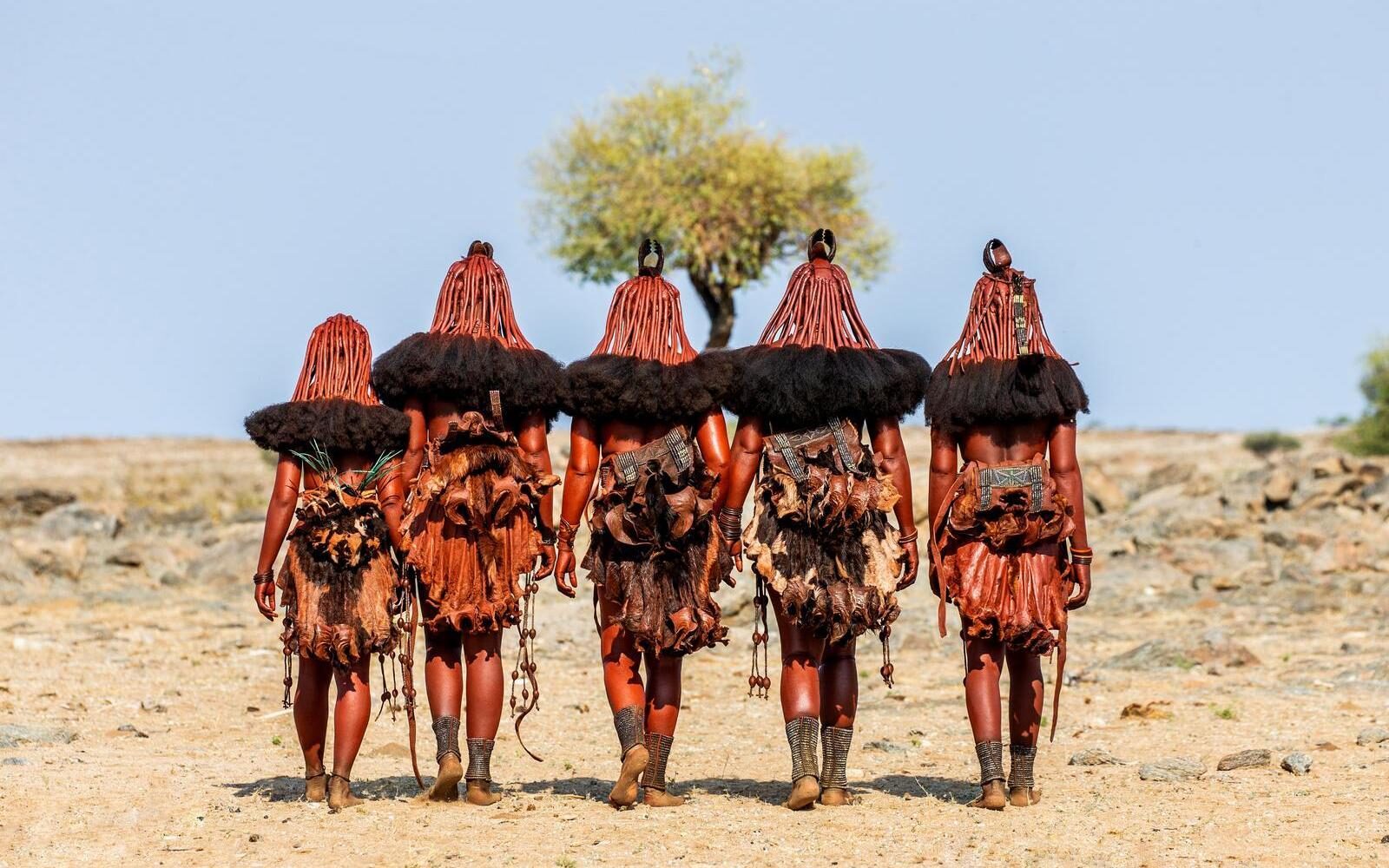
November brings intense heat, with desert temperatures climbing as high as 40°C (104°F). Afternoon thunderstorms mark the start of the wet season, offering welcome relief and transforming the dry plains into green landscapes. This is the month when flamingos gather in their thousands at Walvis Bay, while it also marks the beginning of peak birdwatching in the Caprivi Strip, which lasts until April. We recommend staying at Hoanib Camp to observe desert-adapted wildlife and experience the culture of the Himba and Herero people.
Namibia in December
Best for Christmas celebrations
December is the start of the rainy season in Namibia and the beginning of the summer. You can expect hot temperatures of around 30°C to 35°C (86°F to 95°F). On the coast the climate is more pleasant, with cooler air and fewer visitors than in the winter months. Travelling in December also gives you the chance to experience local Christmas celebrations in towns and villages – a festive alternative to the traditional holiday season.
Namibia inspiration
Get inspired with two of our Namibia travel guides. Discover the best places to visit across this extraordinary country and explore 11 reasons to consider adding it to your travel list. These guides highlight Namibia’s vast desert horizons, its remarkable wildlife and its deep culture, designed to spark ideas for your own journey.
The Best Time to Visit Namibia
Our month-by-month guide explores Namibia’s changing seasons, highlighting wildlife, desert transformations and cultural festivals. With expert insight, we sha…
Read more
A Guide to Safari Shoulder Seasons
Set out on low-season safaris in Africa, the Amazon, Australia and India. Become immersed in peaceful nature and experience the lesser-known perks of legendary…
Read more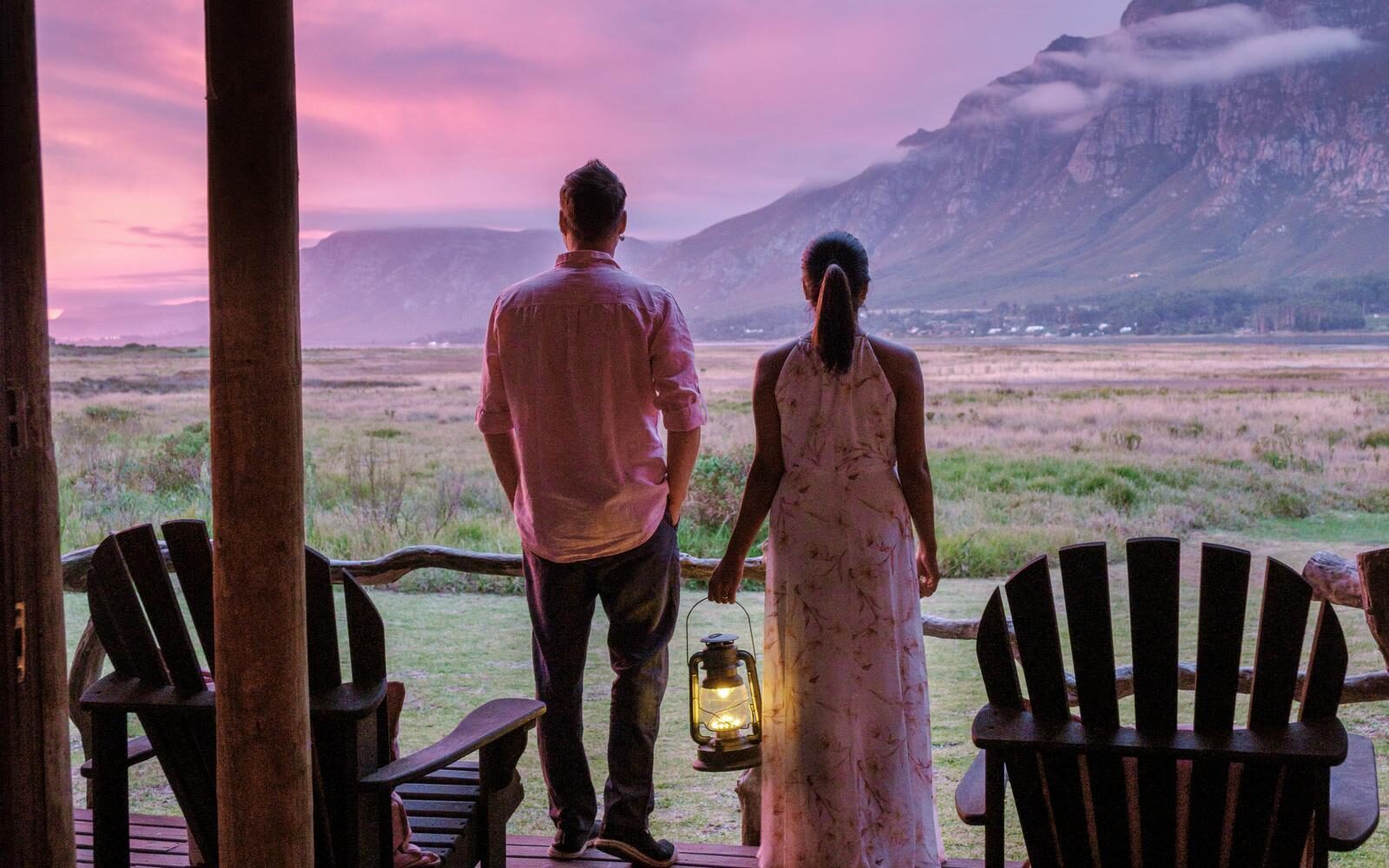
The Best African Honeymoon Destinations Month by Month
Discover the best times of year for an Africa honeymoon with expert tips for the top safari destinations, outdoor activities, beaches and more each month.
Read moreIf Namibia has sparked a love for immersive wilderness experiences, you might want to go a little further. Combining countries is one of the most rewarding ways to experience Africa’s diversity side by side – the silence of Namibia’s deserts contrasted with Botswana’s lush Okavango Delta, or the stark beauty of the Skeleton Coast paired with vibrant wildlife encounters. These contrasts show the continent in ways a single destination cannot, creating a journey that feels layered and complete.
Our guide to our favourite countries to combine in Africa shows how Namibia fits beautifully into a wider itinerary, while also sharing other pairings that bring together safari, culture and coastline.
Trip inspiration
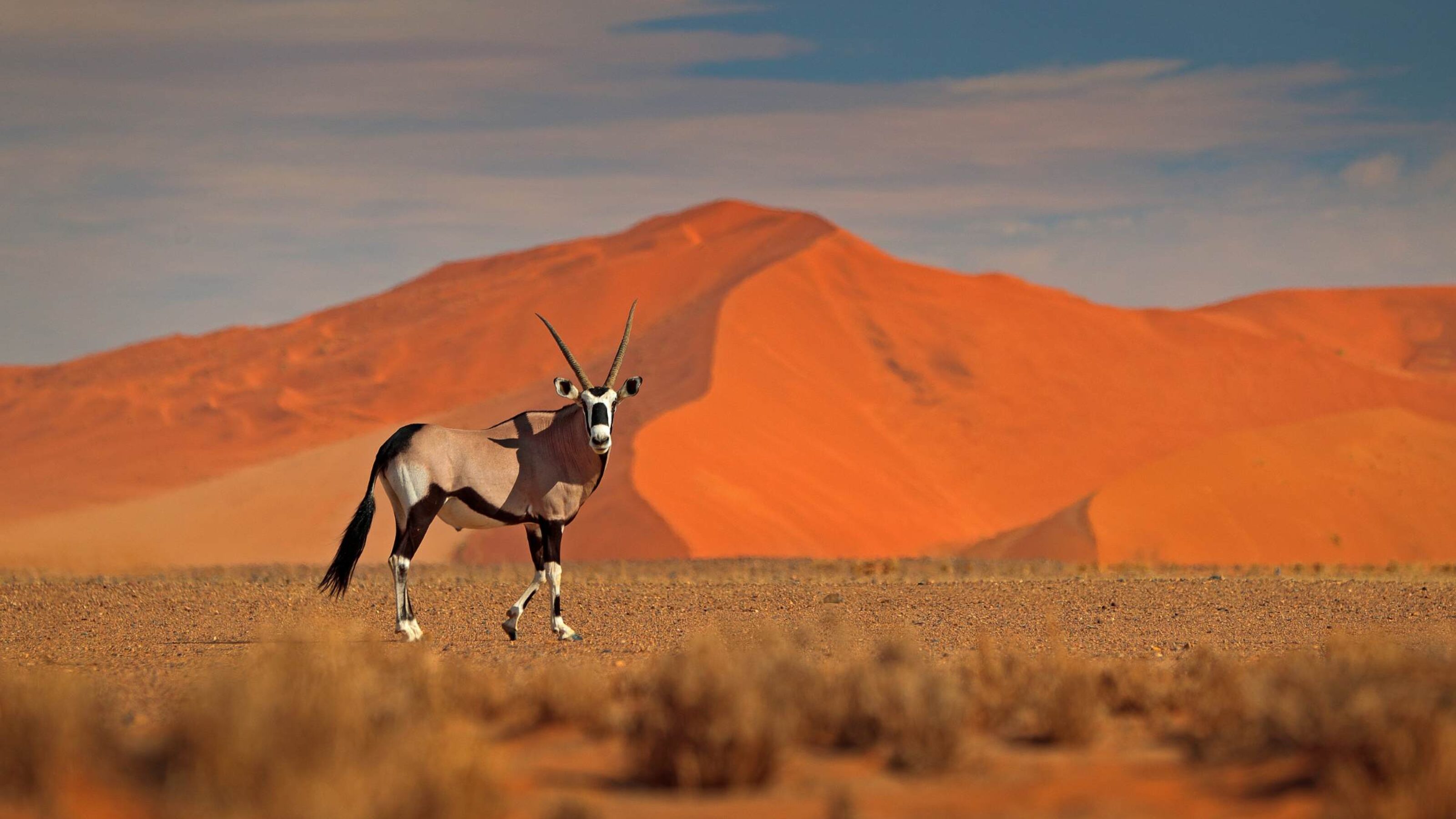
A Luxury Grand Tour of Namibia
A remarkable Namibian grand tour that takes you on a luxury safari through surreal desert landscapes to find wildlife and quirky towns. From its capital, Windh…
Explore trip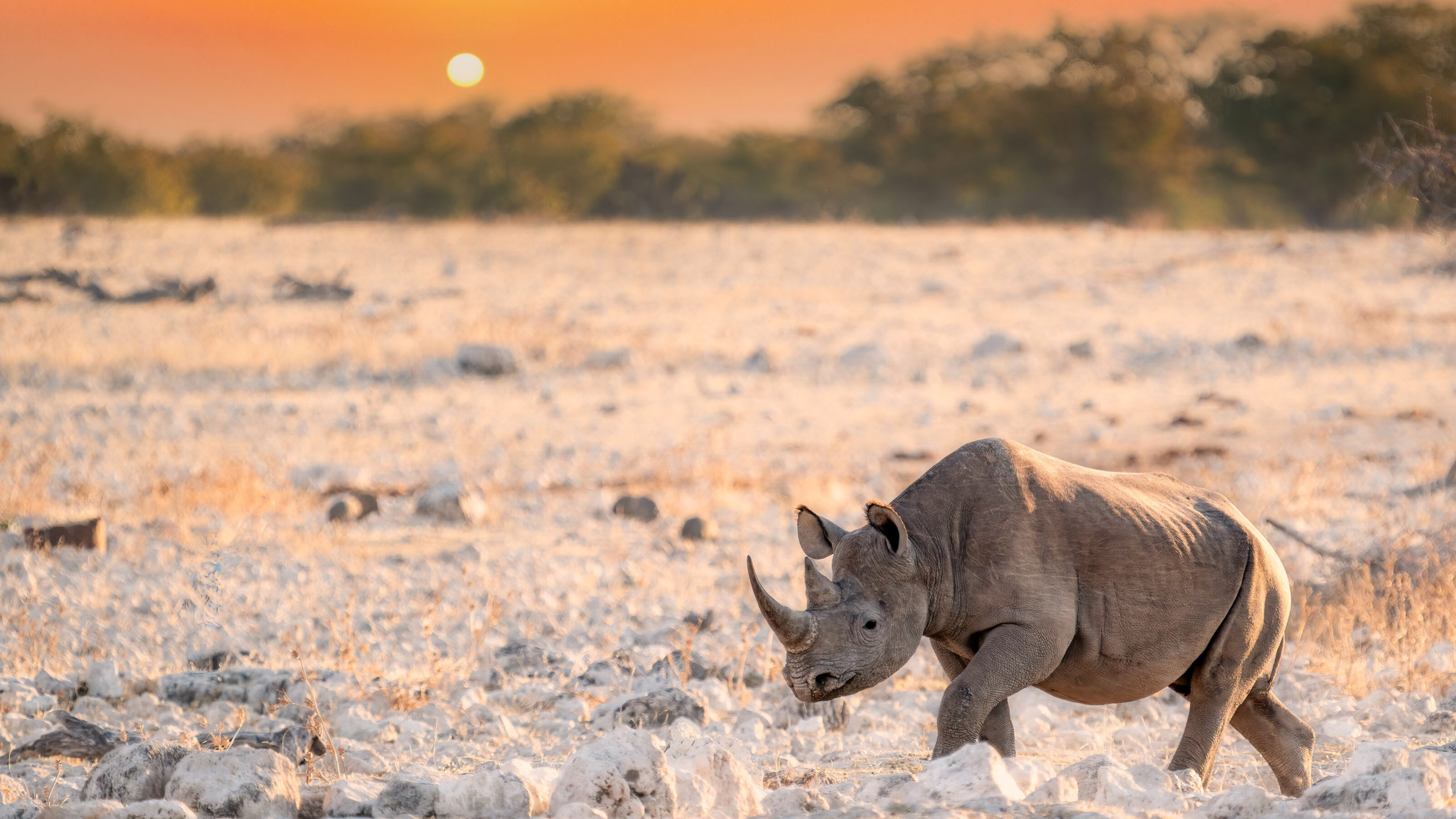
Discover the Desert Wildlife of Namibia
Experience the thrill of discovering Namibia's unique desert inhabitants on this 11-day adventure from Windhoek to the remote wonders of Damaraland, the Skelet…
Explore trip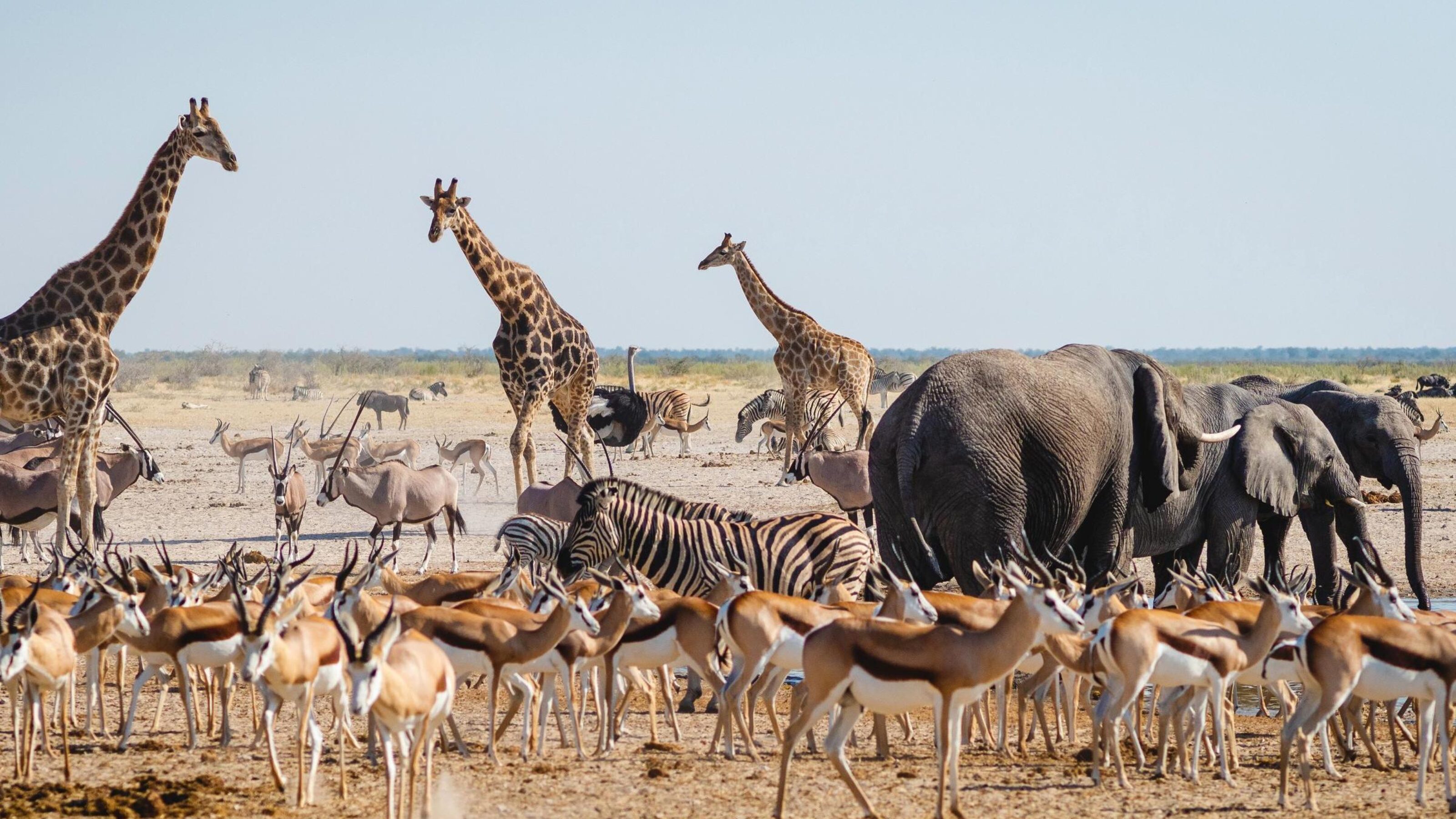
A Flying Action Adventure
This is a seamless, adventurous Namibia flying safari itinerary that sees you cross this country’s vast and beautiful wilderness in comfort, allowing more time…
Explore tripWhere to stay
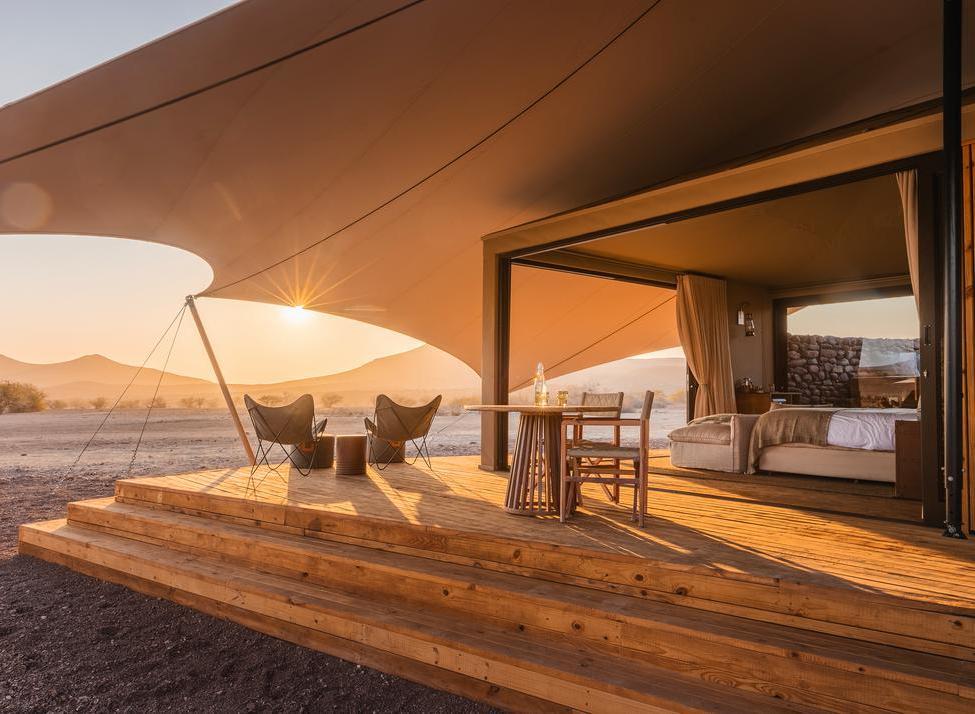
Wilderness Desert Rhino Camp
Learn everything about the critically endangered black rhino
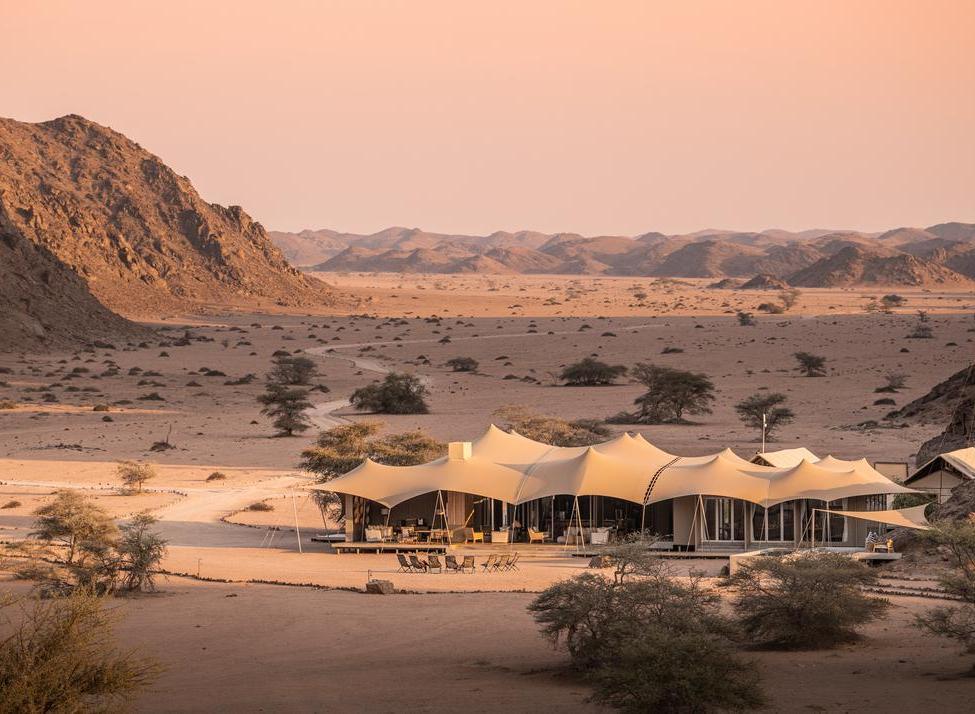
Wilderness Hoanib Skeleton Coast Camp
A luxurious tented camp
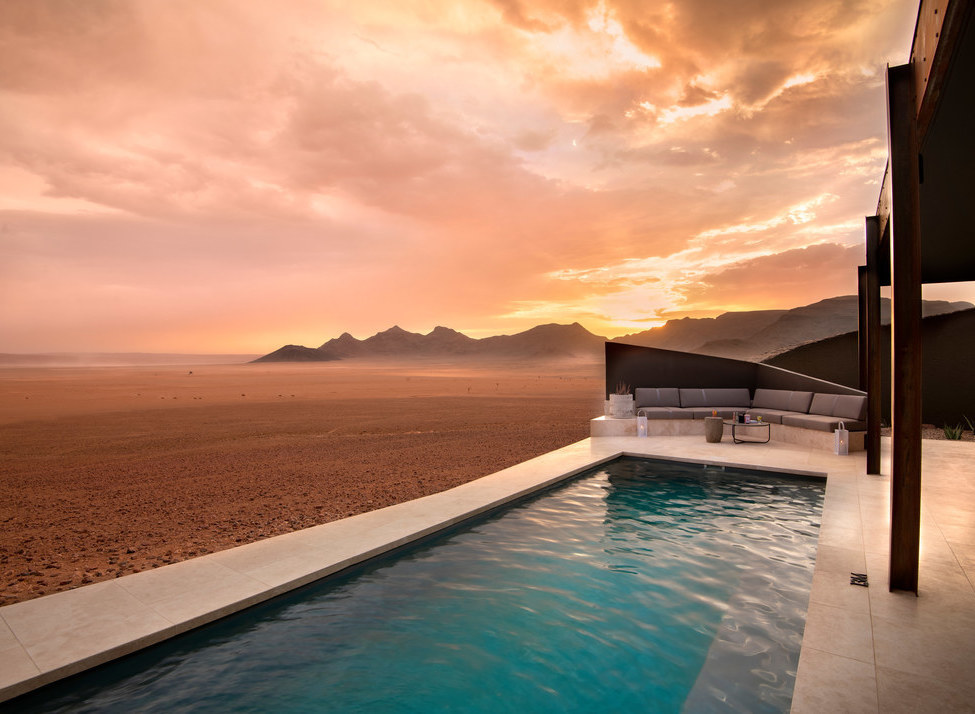
Sossusvlei Desert Lodge
Deluxe desert villas surrounded by peaceful solitude
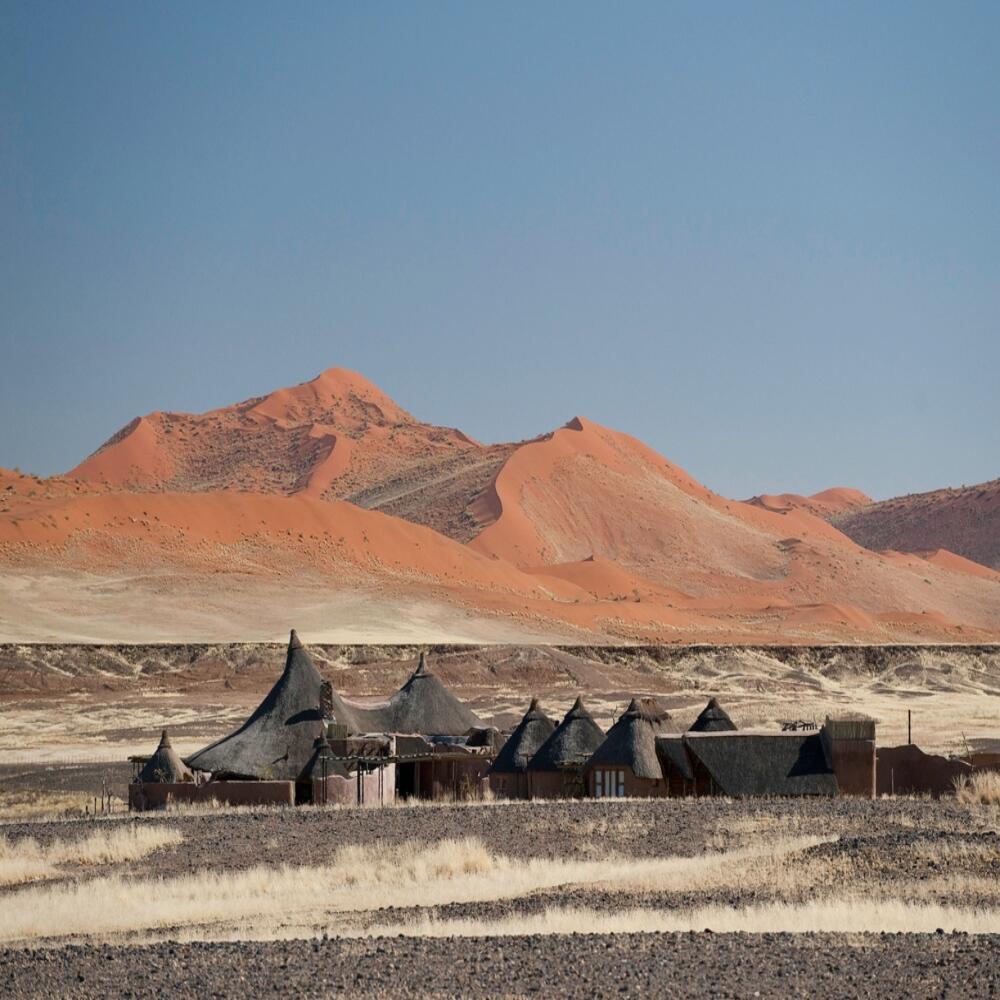
Wilderness Kulala Desert Lodge
A desert lodge in the ancient dunes of Sossusvlei
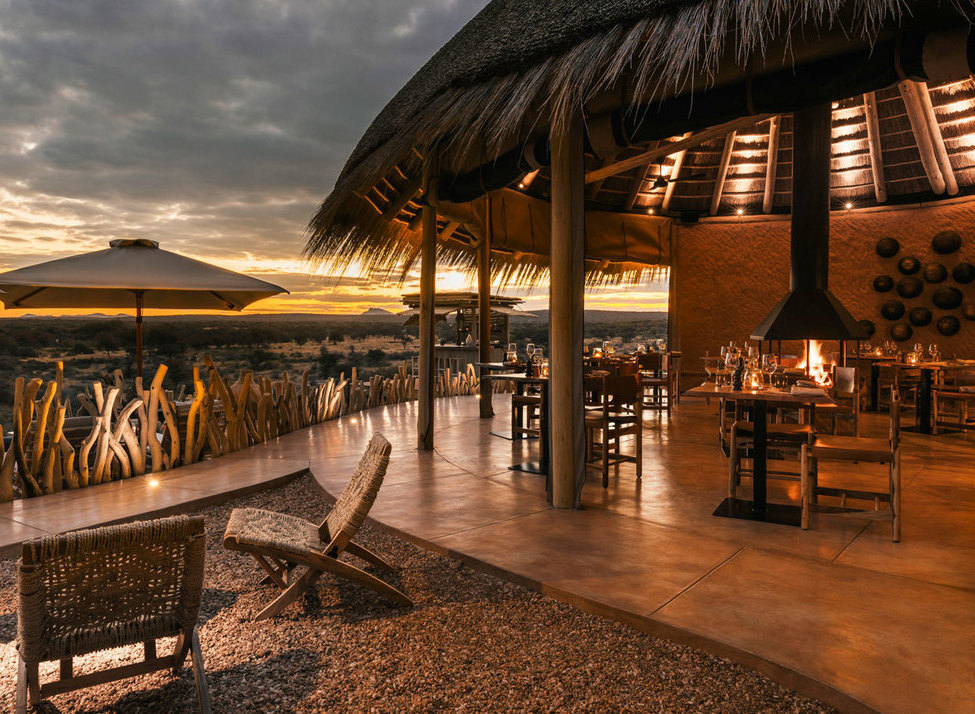
Zannier Hotels Omaanda
A design-led safari retreat with wide views and a strong connection to conservation
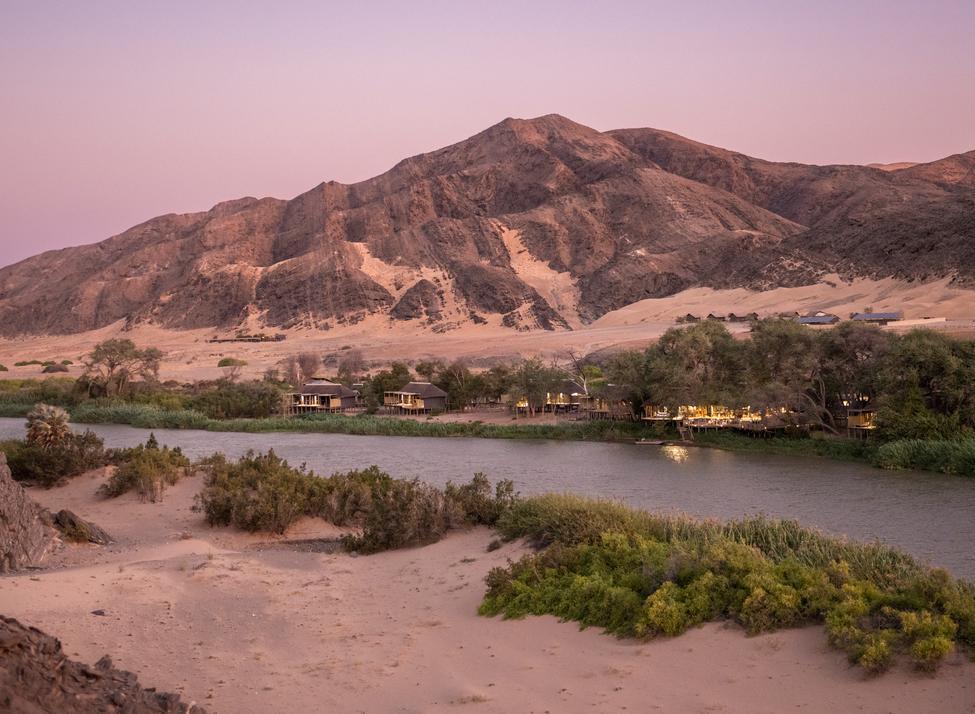
Wilderness Serra Cafema
Luxury desert lodge, paying homage to Himba culture
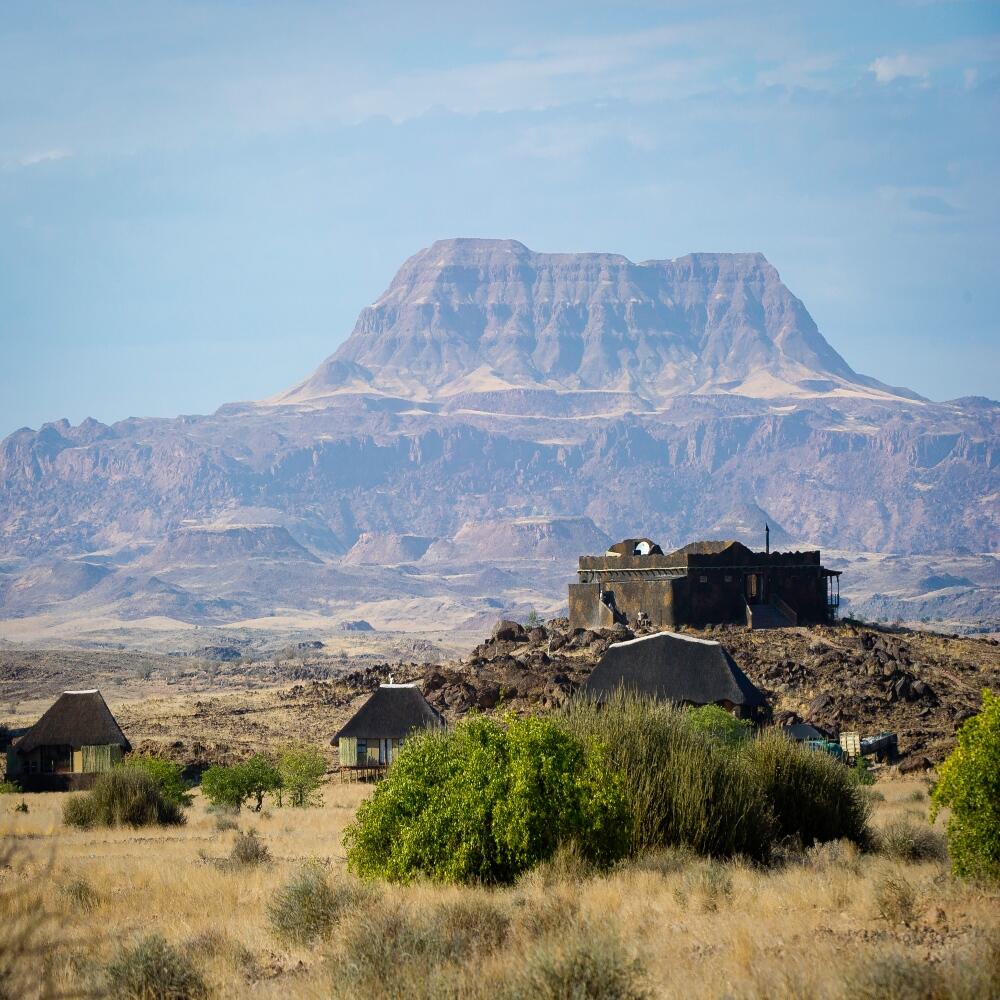
Wilderness Doro Nawas Camp
A luxury safari lodge within the Doro Nawas Conservancy
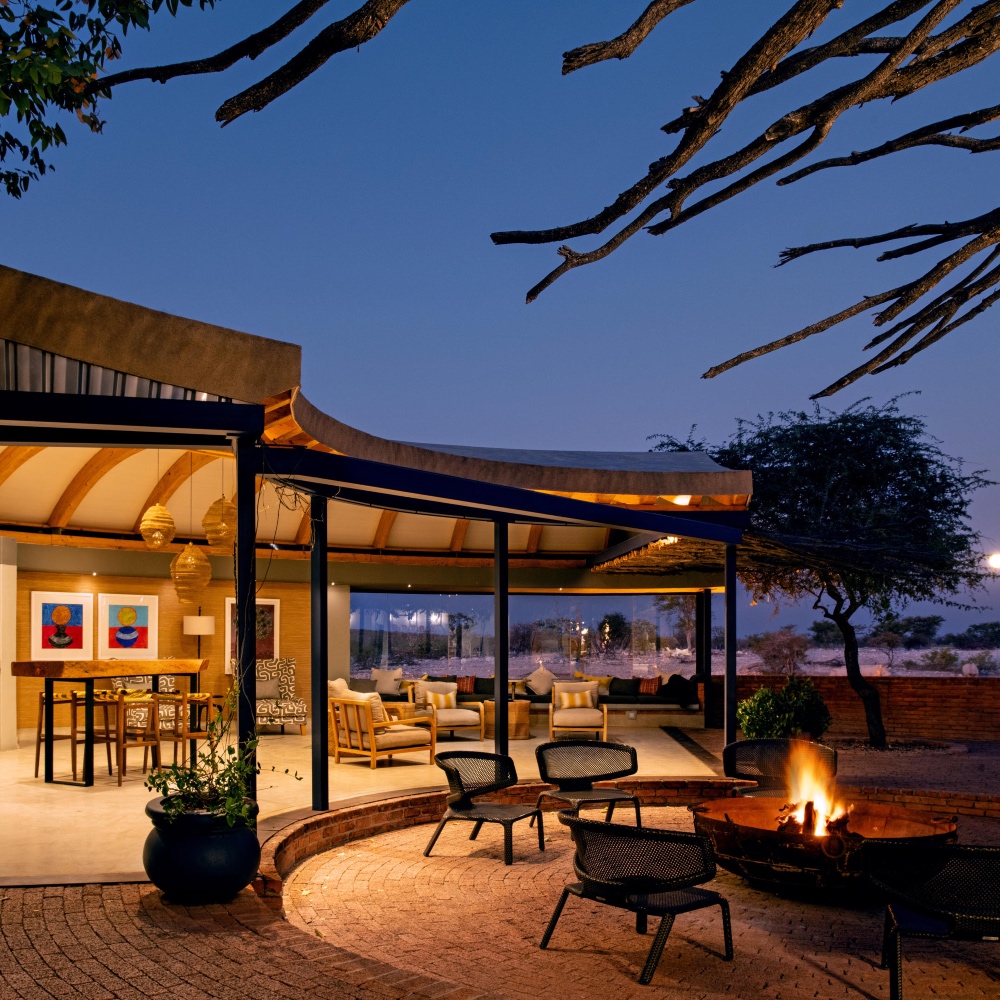
Andersson's at Ongava
Luxury Ongava retreat with panoramic wilderness views
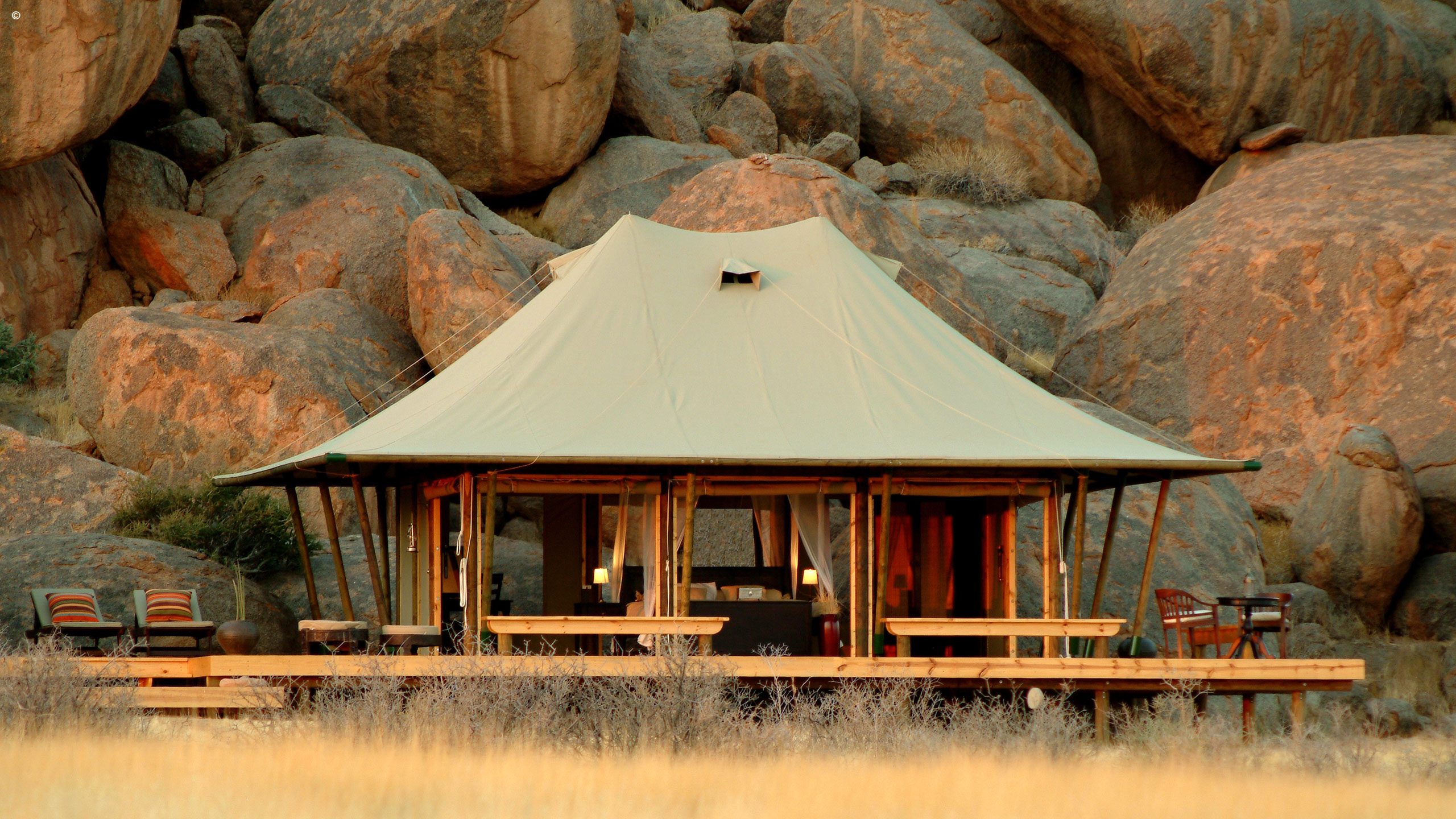
Boulders Camp
Boulders Camp is a camp in NamibRand Nature Reserve, Namibia.
Ready to start planning?
Tell us what you have in mind and our travel designers will shape the first ideas with you.
Start planning